Gut health
Your gut wall is four layers deep. A probiotic works on one of them.
Most gut supplements aim at the microbes. The barrier they sit against has three more layers.

By Sarah Rahal, MD
Pediatric neurologist, founder of ARMRA
I spent years as a pediatric neurologist before I made a supplement, and the thing I remember most from clinic is not a diagnosis. It is a shelf.
Patients would arrive with a photo of it on their phone. Twelve bottles, sometimes twenty. A probiotic, a fiber, an enzyme, a greens powder, a bitter tincture someone recommended. Each one bought in good faith, each one working on something real. And the person holding the phone still felt bloated at four in the afternoon, still felt heavy after food they used to eat without thinking.
The obvious read is that none of it works. I do not think that is right. I think most of it works on one layer, and the gut wall has four.
What follows is the anatomy, in plain language, and then an honest account of where a whole food like colostrum is claimed to sit in it, including what the evidence behind those claims actually is. I have a clear commercial interest in the last part, so I have tried to be exact about which numbers come from cells, which come from a small survey, and which come from customers writing on their own.
01 The anatomyFour layers, four jobs, four different ways to fall short
The wall between what you eat and the rest of you is roughly one cell thick. That single sentence is the whole reason this is engineered so carefully. A structure that thin cannot be a simple partition, so evolution built it in layers, each one covering the failure mode of the one above it.
The microbiome
The population living in the channel. It ferments what you cannot digest, and it competes for space against strains you would rather not host.
The mucus layer
A gel the gut secretes onto itself. It keeps the traffic at a distance from the cells, so most of what passes through never touches the wall at all.
The cell wall and its seams
One layer of cells, packed edge to edge and stitched at every join. The cells matter. The stitching between them matters just as much.
The immune layer
The surveillance sitting just behind the wall. It decides what gets a reaction and what gets waved through, which is why a gut problem rarely stays a gut problem.
Read those four again and notice something. They are not a ranking. They are a chain. A thinning mucus layer puts more traffic against the cells. More traffic against the cells puts more work on the seams. Strained seams put more work on the immune layer behind them. Which is why the symptom you feel, the bloating at four in the afternoon, is a poor guide to which layer is actually under strain.
02 The mapWhere the shelf of bottles actually lands
This is the part I wish I had drawn for patients years earlier. Take the usual gut supplements and place each one where it acts. Not where the label promises, where it acts.
A probiotic is, by definition, a live microorganism. Whatever else it does, it enters as a population and it acts as a population. Prebiotic fiber feeds that population. Digestive enzymes go to work on the meal itself, upstream of the wall entirely. None of that is a criticism. It is a description.
So if you have been rotating through those categories and the four o'clock heaviness keeps coming back, the reasonable conclusion is not that supplements do not work. It is that you have been supplying one layer repeatedly and the strain may be sitting in another.
The question worth asking about anything you take
Not "what is it good for", which every label answers. Ask which layer does it reach, and what is the evidence that it reaches it. Those two questions collapse most of the category quickly, and they are the ones I have tried to answer honestly about my own product below.
The one food built to construct a gut barrier from nothing
Here is the observation that redirected my career. Every mammal is born with a gut wall that does not work yet. No established microbiome, a thin mucus layer, seams that are not sealed, an immune layer that has never met anything. That newborn has a matter of days to get all four running.
Evolution did not leave that to chance. It supplies one food for exactly that window.
ARMRA describes colostrum as containing over 400 bioactive nutrients. That number is easy to skim past as marketing, so it is worth naming the categories, because they map onto the four layers with an almost irritating neatness. These are the groups ARMRA lists on its science page:
- Milk oligosaccharides. A class of prebiotic that, per ARMRA, cannot be found in any other natural source, and which selectively nourishes bifidobacteria while starving strains that are harmful. That is layer 1, and it is the one ingredient here that a fiber supplement cannot substitute for.
- Immunoglobulins, including IgG, IgA and IgM. Antibodies whose job is to bind foreign material before it reaches cells. Layer 2 and layer 4.
- Tissue growth factors, including IGF-1 and TGF-beta. Signals for repair and renewal of tissue. Layer 3.
- Lactoferrin and cytokines. Immune modulating factors that, per ARMRA, either stimulate or temper immune activity depending on need. Layer 4.
- Regenerative peptides, free amino acids, antioxidants, trace minerals, adaptogens and mitochondrial regenerators such as CoQ10 and PQQ. The cellular housekeeping underneath all of it.
That is the argument for colostrum in one paragraph. It is not a compound aimed at a mechanism. It is the assembly kit for the whole wall, which is a genuinely different proposition from anything else on the shelf.
Now the harder half.
04 The evidenceWhat the research is, and what it is not
I am going to separate the two bodies of evidence ARMRA publishes, because they are not the same strength and it does nobody any good to blur them.
First, the cellular research
These are ARMRA's published findings from cellular research, meaning cells in a laboratory, not people in a trial. Read them as mechanism, not as outcome.
Source: ARMRA, The Science, which also reports a healthy immune response triggered in under two hours and an 11 percent figure for immune cells. These are cellular research results. They describe what happens to cells in a dish, which is the right place to look for a mechanism and the wrong place to look for a promise about your afternoon.
Second, the human numbers
ARMRA also publishes four figures from research in people. I want to state the design before the results, which is the reverse of how these are usually presented.
Self-reported outcomes at three months
60 participants aged 18 to 65, 2g of ARMRA Colostrum daily
ARMRA publishes this as an open-label clinical research survey. Its own footnote reads: "Individual results may vary. Findings occurred within a period of 3 months in an open-label clinical research survey of 60 participants aged 18-65 consuming 2g of ARMRA Colostrum daily." Open-label means everyone knew what they were taking, and there was no placebo group. Sixty people is a small number. Treat these as what people reported, not as a controlled trial, because that is what they are.
I could have put the 86 percent on a banner and left the design out of it. Most of the category does. But you are being asked for real money for a jar of powder, and a number without its design attached is not information, it is decoration.
One practical detail hides inside that footnote and I have never seen it discussed. The dose in the research was 2g daily. The label defines a serving as one scoop of 1g. So the research dose is two scoops, not one, which is exactly what the directions mean when they say to increase as desired. If you are going to try this, that is the number worth starting from.
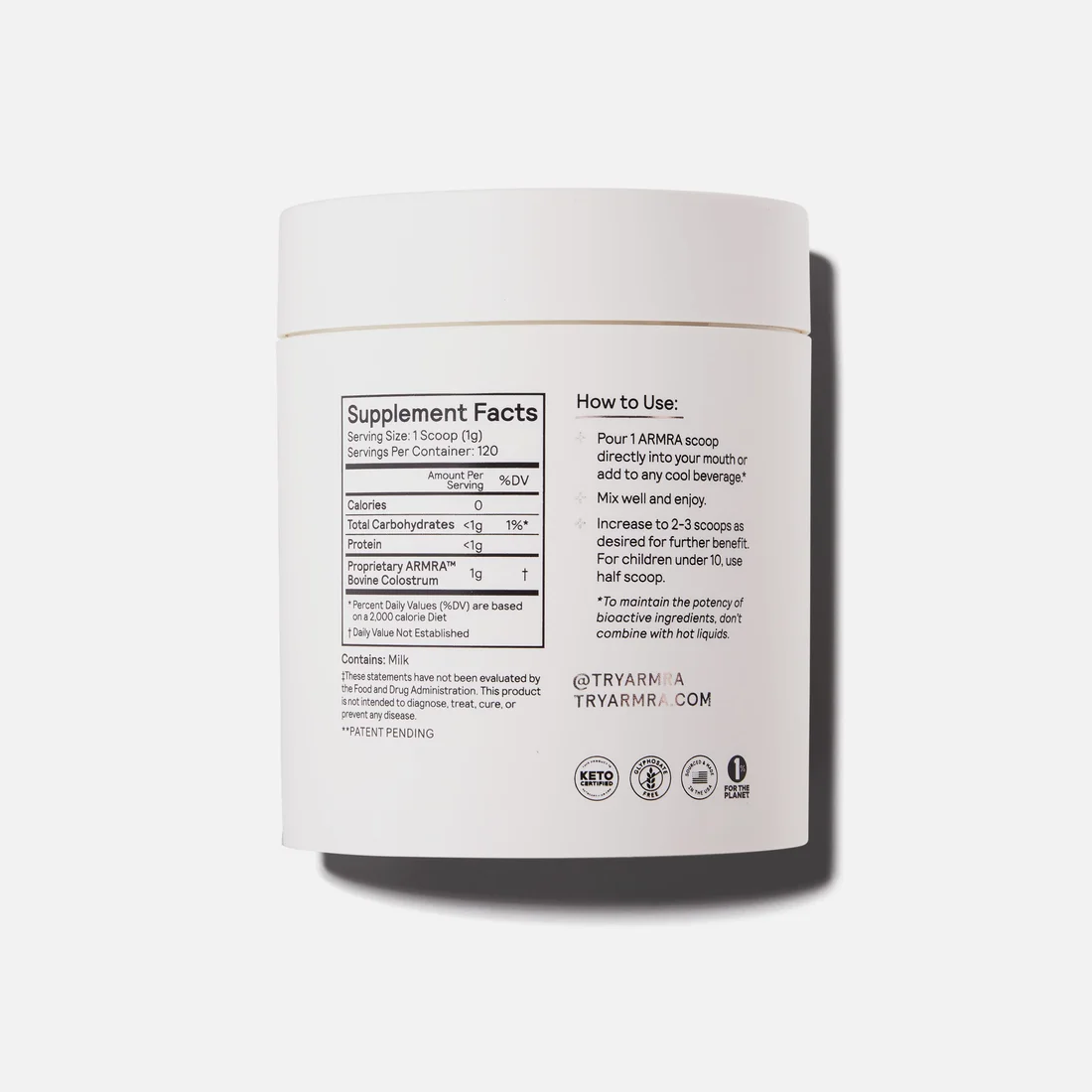
The instruction on the jar that explains the entire product
In the directions, under how to use, there is a line in small italics:
People read that as a serving suggestion. It is not. It is the whole thesis of the product printed as a warning, and once you see why, the price starts to make a different kind of sense.
Everything that makes colostrum interesting is a fragile protein or peptide. Antibodies are proteins. Growth factors are proteins. Lactoferrin is a protein. Heat does to those what it does to an egg white, and the change does not reverse. So if your coffee would wreck it in your cup, consider what a conventional pasteurization run does to it in a factory.
ARMRA's account of the standard industry approach is blunt, and it is on their own science page. High temperature pasteurization and sterilisation are used to extend shelf life. In the process, proteins are denatured and rendered unrecognizable by the body, stable fats are oxidized into potentially inflammatory byproducts, and many of the bioactives responsible for the benefits are degraded.
Against that, ARMRA states its Cold-Chain BioPotent pasteurization concentrates the 400 plus bioactives in pure and bioavailable form. The process also removes casein and fat, which is worth pausing on. Casein, specifically A1-beta-casein, is the fraction most often associated with dairy sensitivities. Taking it out is not a nutritional flourish, it is the reason a dairy-derived powder can be tolerated by people who avoid dairy.
06 The test you can runIf it dissolves beautifully, ask why
My favorite thing about this product is that it is checkable at your own kitchen counter, which is rare in supplements.
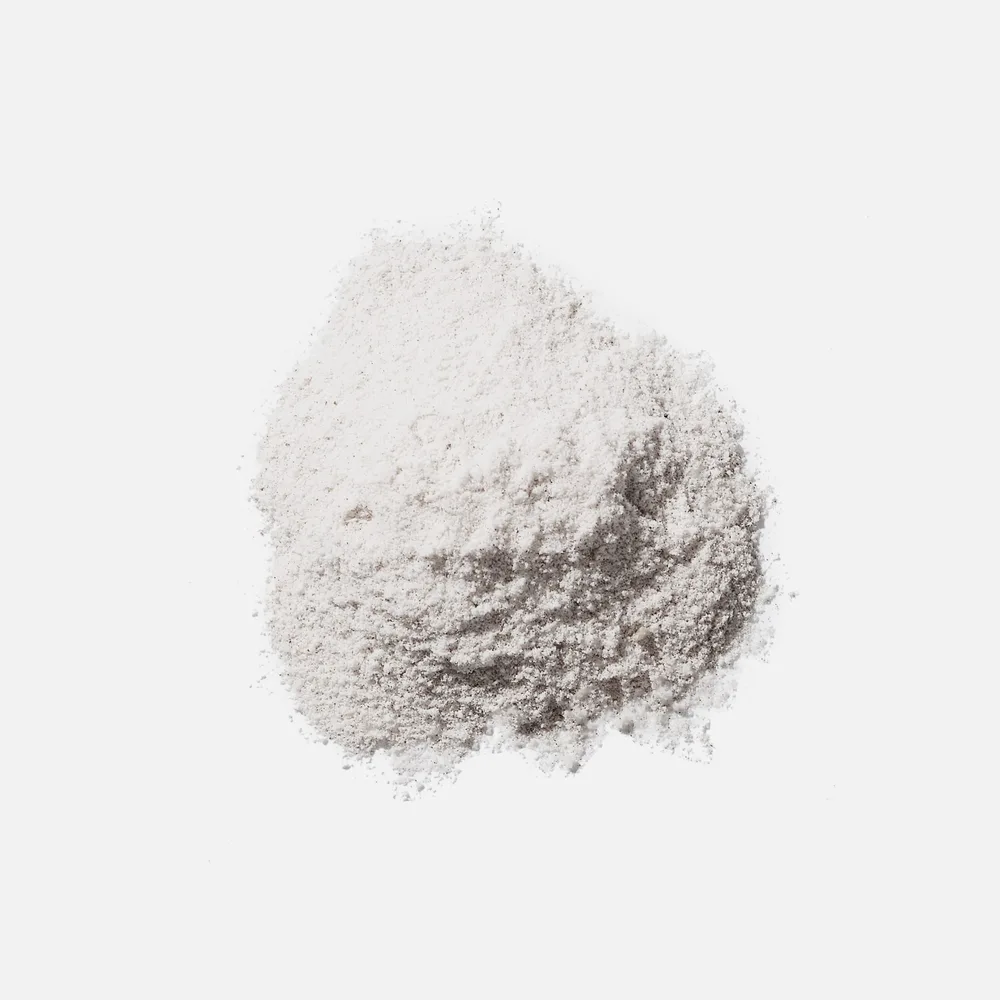
Pure colostrum clumps. It is a stubborn powder. The industry fix for that is to add binding agents to improve solubility, and a smoother powder is an easier product to sell. ARMRA's position, in its own words, is that if you find your colostrum does not clump, it might be time to question what is really in your colostrum.
You do not need to take my word for that, or anyone's. Tip a scoop into cold water. What happens next tells you something about what you bought.
The same logic runs through what is deliberately absent. This is ARMRA's published list.
- Sugar
- Gluten
- GMOs
- Glyphosate
- Hormones
- Antibiotics
- Soy
- Fat
- Casein
- Corn
- Oils
- Binders
Also absent: artificial additives and anti-caking agents. The ingredient line reads: Proprietary ARMRA Colostrum Concentrate (Bovine). Contains: Milk. Source: armra.com product page and jar label.
07 The supplyWhere it comes from, and the part I insisted on
Return to that 48 to 72 hour window. Colostrum is not a byproduct you can order more of. Every jar traces back to a calf that was born, and there is exactly one ethical question that follows: did the calf get its share first?
ARMRA's stated practice is calf-first sourcing. Only overflow colostrum is collected, the surplus remaining after the calves are fully fed. Their own note is that this surplus is typically discarded as an industry waste product.
The rest of the sourcing standard, as published: grass-fed, non-GMO, certified glyphosate-free, from family-owned dairy farms across the USA, with cattle that never receive antibiotics or hormones. Products are made in FDA-registered facilities following current Good Manufacturing Practices, and tested for glyphosate, heavy metals and microbiological contaminants by ISO-certified third-party laboratories before release.
- Calf-first sourcing. Only the surplus after the calves are fully fed.
- Grass-fed, non-GMO, certified glyphosate-free, family-owned USA dairy farms.
- No antibiotics and no hormones given to the cattle.
- Made in FDA-registered facilities under current Good Manufacturing Practices.
- Tested for glyphosate, heavy metals and microbiological contaminants by ISO-certified third-party laboratories, before release.
- Keto-Certified and Certified Non-GMO.
Source: armra.com, The Science, and the product page for ARMRA Colostrum Unflavored Jar.
Why sourcing is not a side issue for this specific product
Colostrum concentrates whatever the animal was carrying, because concentrating is the entire manufacturing step. A supplement made by concentration inherits its inputs in a way that a synthesized compound does not. That is the argument for third-party testing here being a requirement rather than a badge.
What people actually write, including the ones who did not get on with it
ARMRA's product page carries a 4.7 out of 5 average across 15,879 reviews at the time of writing. An average is a summary, and summaries are where the useful detail goes to die, so here are individual reviews as published, in full.
Less bloated!
"I have given up my probiotic supplements and now just take Arm 2x a day. My digestion and bloating has improved. I've been using it for about 6 months."
Diane M., published on armra.com, August 2, 2026
An actual change felt.
"Before colostrum I thought about walking around the block, after I actually do walk around the block. I find myself more regular, more energetic, and more willing to get off the couch."
Robert R., published on armra.com, July 16, 2026
Great for Digestion
"I have been using Armra for 2 years. I honestly can't tell you what it's helping. I just know, it makes a difference first and foremost with digestion, then overall well being."
Patty C., published on armra.com, July 14, 2026
Now the ones a brand page would never show you, and which I think you should read before you spend anything.
Terrible Gut Aches
"I started taking this for all of the potential benefits but it wreaked havoc on my guts. I used one container and moved onto the second hoping that eventually I would get used to it. That did not happen. After quitting the colostrum, it took about a week to start feeling cranky and less bloated. I'm too nervous to try it again."
Jaimie, published on armra.com, July 23, 2026
That review is on our own product page and it is staying there. It matters for a straightforward reason: colostrum is a dairy product. The label says Contains: Milk. Removing casein and fat takes out the fraction most associated with dairy sensitivity, but it does not make the food something other than what it is, and some people will not get on with it. If that is you, the honest answer is to stop, not to push through a second container.
Who I would tell not to bother
- Anyone with a milk allergy. This is a dairy food and the label says so.
- Anyone expecting a result this week. The research window was three months, and most of the reviews above describe timeframes in months and years.
- Anyone hoping a powder will do the work of sleep, food and movement. It will not, and I would rather say that here than have you find out for a hundred and twenty dollars.
- Anyone who is pregnant, nursing, on medication or managing a diagnosed condition, without speaking to their own physician first. That includes people reading this because of something a doctor is already treating.
What it costs, and how to take it so it is not wasted
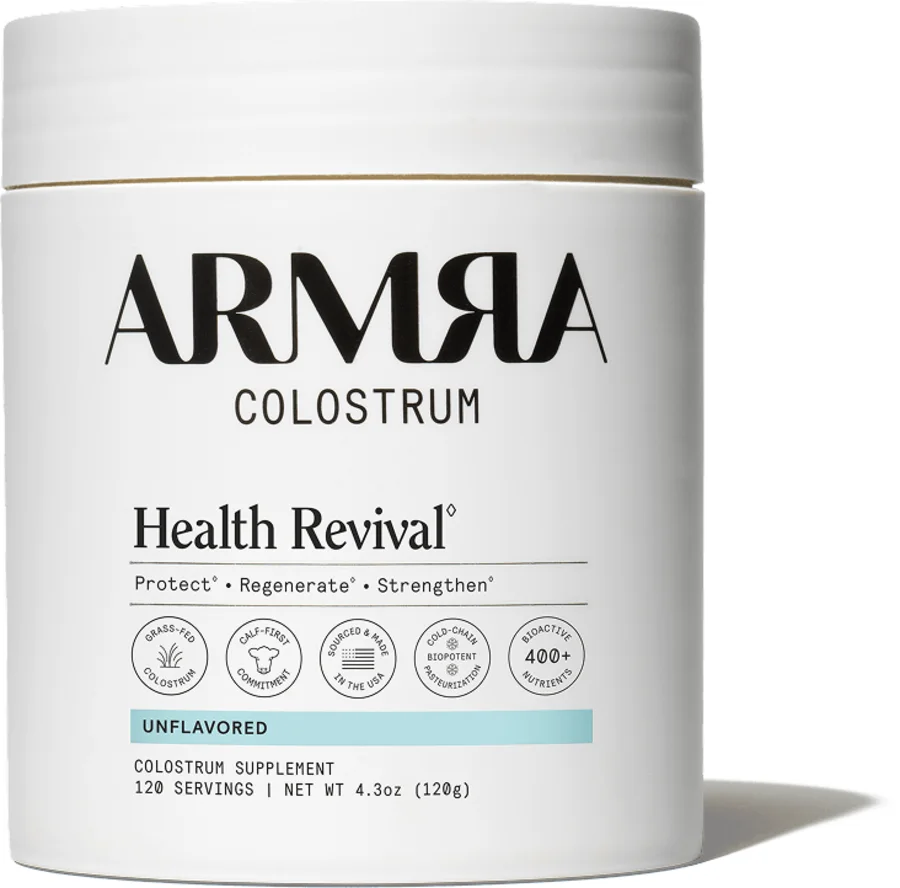
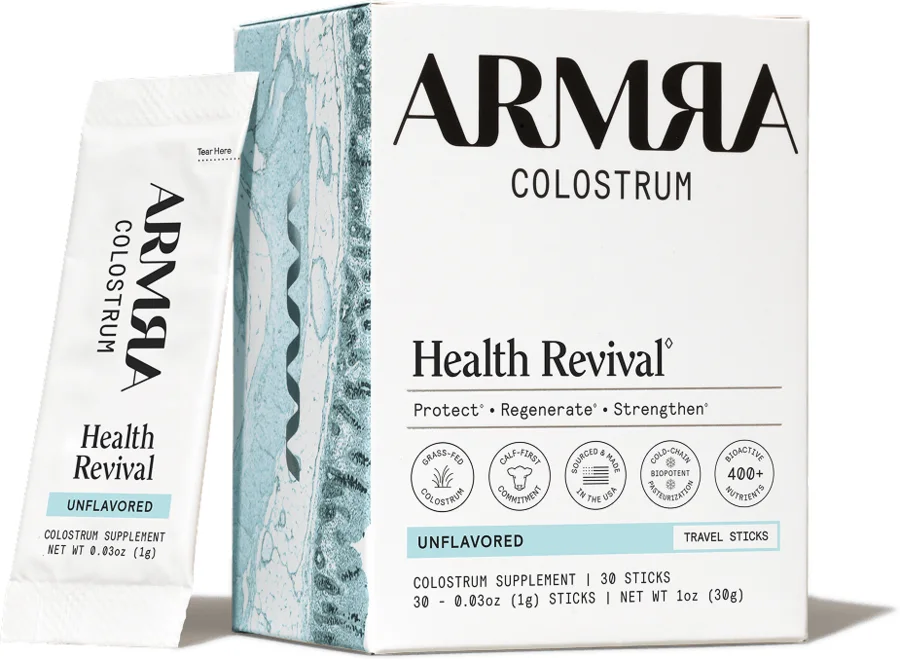
It is not cheap and I am not going to pretend otherwise. What I would say is that the sample pack exists precisely so that the first test of whether your body gets on with this costs fifteen dollars rather than a hundred and twenty.
Four things that decide whether it does anything
- Never hot. Not in coffee, not in tea, not stirred into porridge straight off the stove. The jar says it, and section 5 explains why: heat is the one thing that reliably undoes what you paid for.
- Two scoops, not one. The label defines a serving as one scoop of 1g and says to increase to two or three as desired. The research was done at 2g daily.
- Dry scooping is deliberate. ARMRA suggests taking it straight, to maximize contact with the mucosal surfaces of the mouth and throat. Cold water or any cool drink works too.
- Give it months, not days. The published figures come from a three month window. Judging this in week one is judging the wrong thing.

ARMRA Colostrum, Unflavored
Nature's first food, in the form our processing was built to preserve. 120 servings per jar, third-party tested, made in the USA.
See the jar on armra.comOr start with the $14.99 sample pack if you would rather test it first.
The shelf of bottles was mine too

I trained at Columbia Presbyterian, and before ARMRA I was Assistant Professor of Neurology and Pediatrics and Director of Pediatric Headache Medicine at the Icahn School of Medicine at Mount Sinai. I say that not as a credential parade but because it explains the bias I brought to this: I was trained to look for a mechanism before I look for a result.
What sent me down this road was not the clinic. It was a health crisis of my own that nearly took my life, and which put me on the other side of the desk holding my own shelf of bottles. Here is how I have described it since:
I went looking through the research for something that spoke to the whole barrier rather than one layer of it, found thousands of publications on colostrum, and found that almost nothing on the market preserved the parts that made it interesting. So the work became the processing, which is why the coldest step in this business is the one I am proudest of. I launched ARMRA in 2020.
If you take one thing from this page, I would rather it be the four-layer picture than the product. It is the thing I wish someone had drawn for me at the start, and it will make you a better judge of everything on that shelf, including mine.
Start with one layer at a time, or all four
120 servings, one ingredient, no binders. Cold water, two scoops, three months.
See the jar on armra.comIndividual results vary. This is a food, not a treatment.